


What is ISF? The Importance of ISF Filing When Exporting Goods to the U.S.
What is ISF? The Importance of ISF Filing When Exporting Goods to the U.S.
When exporting goods to the U.S. market, businesses should not only focus on product quality, pricing, or common documents such as invoice, packing list, and certificate of origin (C/O), but must also pay special attention to a mandatory declaration called ISF (Importer Security Filing). So, what exactly is ISF? Are there any special considerations when filing ISF?
What is ISF?
ISF (Importer Security Filing), also known as the Import Security Declaration – “10+2”, is a mandatory procedure issued by the U.S. Customs and Border Protection (CBP).This regulation applies to all shipments imported into the U.S. by sea, aiming to ensure national security and the safety of the global supply chain.
Before a container is loaded onto the vessel at the port of origin, the importer or an authorized agent must file ISF so that CBP can obtain advance information about the shipment — including the seller, buyer, manufacturer, stuffing location, HS code, and country of origin. This allows CBP to assess potential security risks before the cargo arrives in the United States.
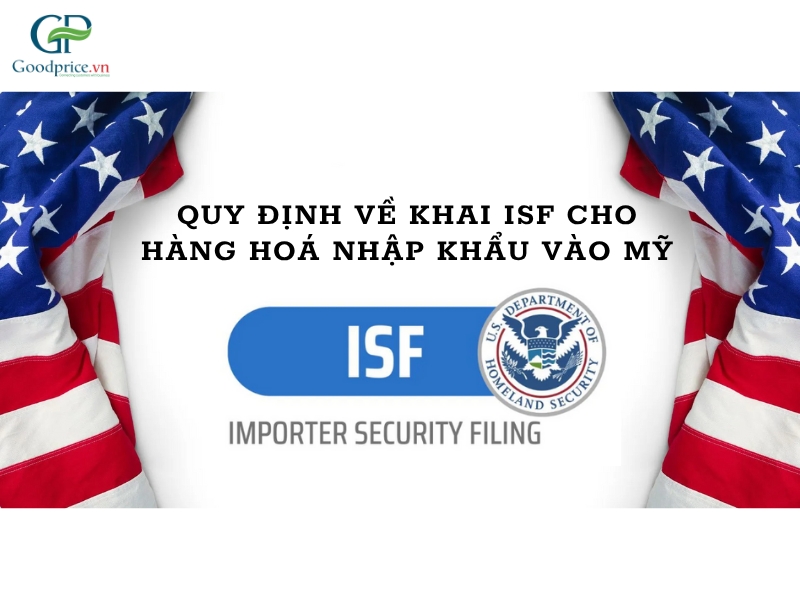
Regulations on ISF Filing for Goods Imported into the U.S.
Why is ISF Filing Required?
ISF filing is part of the maritime security program implemented by the U.S. government after the 9/11 incident, aiming to detect and mitigate risks in the global supply chain. Specifically, ISF helps CBP to:
- Collect detailed information about the goods, the seller, the buyer, and the parties involved in the transaction.
- Analyze security risks and detect illegal or high-risk cargo early.
- Prevent trade fraud, smuggling, and transportation of prohibited goods.
- Reduce inspection time at ports, helping the customs clearance process become faster and more efficient.
In short, ISF is not only a mandatory filing but also an important step that protects the interests of exporters and importers participating in the U.S. market — one of the strictest markets in the world.
When is ISF Filing Required?
ISF applies only to cargo imported into the United States by ocean freight. The following types of shipments are subject to ISF filing: Full Container Load (FCL), Less than Container Load (LCL), Consolidated shipments
Conversely, ISF is not required for: Cargo exported from the U.S. to another country, cargo transported by air, truck, or rail, cargo in transit that is not intended for consumption in the U.S.
Deadline for submission: ISF must be filed at least 24 hours before the container is loaded onto the vessel at the port of loading. If submitted after this deadline, CBP has the right to impose fines or deny unloading of the container at the destination port.
Are There Penalties for Late or Incorrect ISF Filing?
Late or inaccurate ISF filing can result in severe penalties.According to CBP regulations, the importer may face:
- A fine of up to USD 5,000 per shipment for failure to file, late filing, or incorrect information.
- Cargo being held, denied unloading, or required to be re-exported if serious violations are found.
- Being listed as high-risk, causing future shipments to be subject to more frequent CBP inspections, longer clearance times, and higher storage costs.
Additionally, incorrect ISF filing may affect the importer’s compliance score, leading to loss of credibility with partners and logistics agents in the U.S.
Who is Responsible for Filing ISF?
According to CBP regulations, the Importer of Record is ultimately responsible for ISF filing. However, since ISF involves complex technical data, importers often authorize professional service providers such as:
- Freight forwarders or logistics providers,
- Customs brokers,
- ISF filing agents (companies that submit ISF directly through the CBP system).
Authorization must be supported by a Power of Attorney (POA) to ensure legal validity. Even with authorization, the importer remains legally responsible for any late or incorrect filings, so close coordination and data verification before submission are crucial.
Important Notes When Filing ISF
Although ISF filing may seem simple, mistakes are common due to complex data involving multiple parties. Below are key reminders:
- Prepare data early: As soon as the purchase order is confirmed, the importer should collect all necessary details from suppliers — manufacturer, HS code, stuffing location, etc.
- Ensure clear communication: Coordination between exporter, importer, and forwarder is essential to avoid duplication or missing data.
- Double-check accuracy: Even small errors in addresses, HS codes, or bill of lading numbers can cause CBP to reject the filing.
- Update only when necessary: After submission, update ISF only if there are real changes (e.g., stuffing location, shipper, or container number).
- Keep ISF records for at least 5 years in case CBP requests review.
- Differentiate ISF from AMS Manifest: ISF is for security purposes (security filing), while AMS is for transportation information (manifest filing). Both are mandatory and separate from each other.
>>> Quick view: What happens if you file the ISF late?
What Information Must Be Declared in ISF?
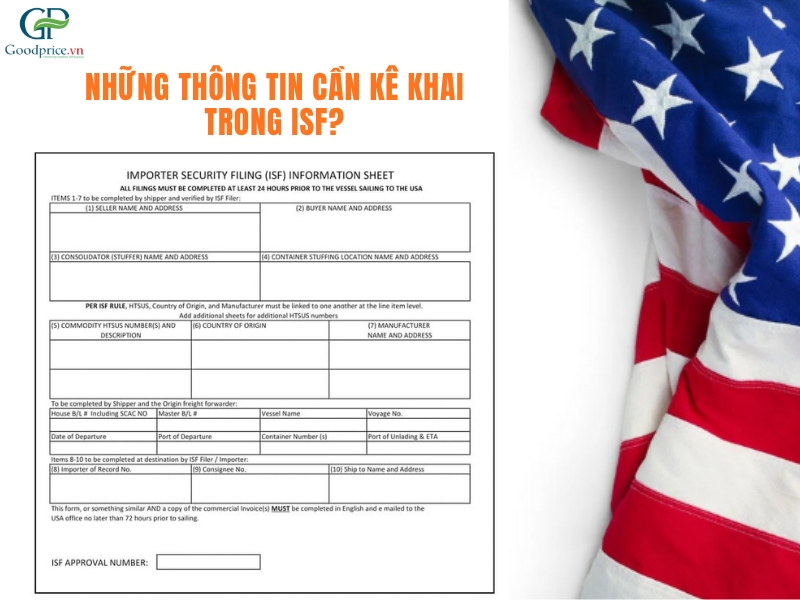
ISF is also known as “10+2 Filing” because it includes 10 data elements from the importer and 2 from the carrier.
Data Provided by the Importer:
- Seller – Exporter of the goods.
- Buyer – Importer or consignee.
- Importer of Record Number – Identification number or registration of the importer in the U.S.
- Consignee Number – Identification of the consignee (if different from the importer).
- Manufacturer (or Supplier) – Manufacturer or direct supplier of the goods.
- Ship-to Party – Final delivery location in the U.S. according to distribution plan.
- Country of Origin – Country where the goods are manufactured.
- HTSUS Number – Harmonized Tariff Schedule code of the United States.
- Container Stuffing Location – Place where goods are loaded into the container (usually factory or warehouse).
- Consolidator – Party or forwarder responsible for consolidating the shipment.
Data Provided by the Carrier or Forwarder:
- Master Bill of Lading / House Bill of Lading Number.
- SCAC Code – Standard Carrier Alpha Code identifying the carrier.
All ISF data must be submitted through the CBP’s Automated Commercial Environment (ACE) system at least 24 hours before loading the container onto the vessel.
>>> Read more: What is a Switch Bill of Lading? Everything you need to know about Switch B/L.
Conclusion
ISF is the first and most crucial step in the import process for goods entering the U.S. by sea.Filing ISF accurately, completely, and on time not only ensures compliance with CBP regulations but also helps goods move smoothly through customs.Conversely, even a small mistake in ISF filing can result in thousands of dollars in fines, delays, and reputational damage. Strictly complying with ISF procedures is the key to unlocking safe, efficient, and sustainable access to the U.S. market for exporters worldwide.
GOODPRICE VIET NAM CO., LTD
Email: [email protected]
Facebook: Goodprice Việt Nam
Phone: +84 906368199 | +84 916112833
Hotline: 1900636299
The article is of interest.

Is It Difficult to Make Chili Powder at Home? How to Make Pure Chili Powder

When New Year Arrives, the Whole Family Gathers Around Delicious Dishes Made from Glutinous Rice Flour

5 Amazing Health Benefits of Lotus Root Powder

What is rice flour? How to choose and buy high-quality rice flour

Buy pure brown rice flour for production