
Which International Payment Method is the Safest for Import-Export Businesses?
Which International Payment Method is the Safest for Import-Export Businesses?
In international trade, payment risk is always a major concern for both sellers and buyers. Choosing the right payment method not only helps minimize risks but also ensures cash flow, credibility, and business efficiency. Below is an analysis of the most common international payment methods, their advantages and disadvantages, and solutions to help businesses reduce payment risks.
Common International Payment Methods
Currently, when trading import-export goods, enterprises mainly use the following four common international payment methods:
Telegraphic Transfer (T/T)
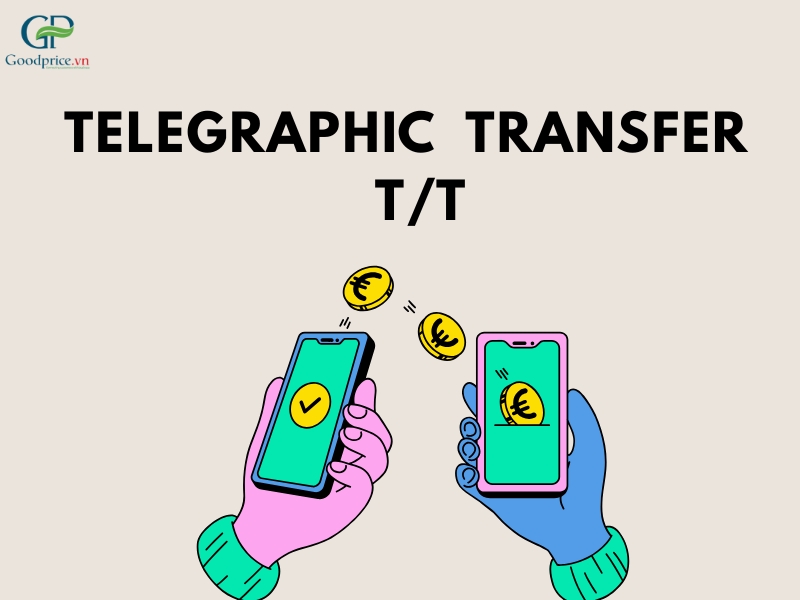
This is a relatively simple and widely used payment method in which the buyer instructs their bank to transfer money directly to the seller through the SWIFT system or equivalent international money transfer channels.
The parties can flexibly agree on advance payment, deferred payment, or installment payments, depending on the level of trust between them.
Letter of Credit (L/C)
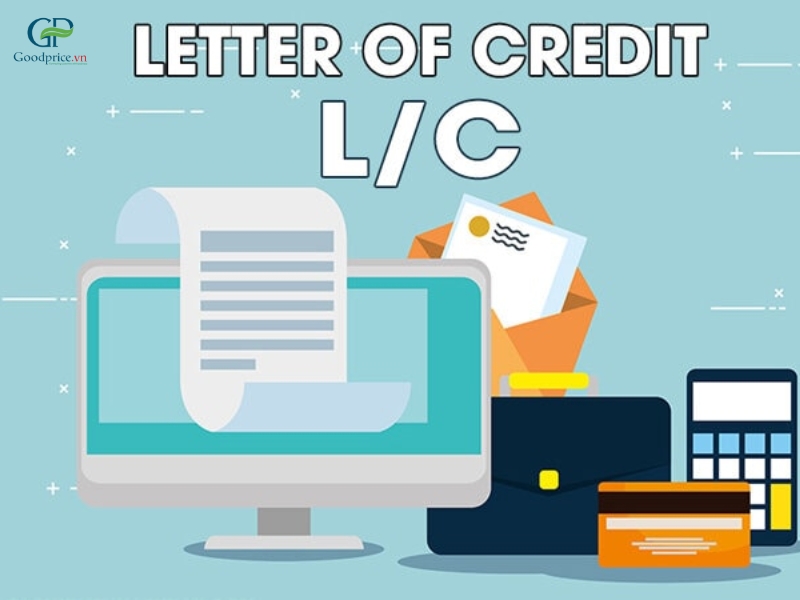
L/C is considered the safest payment method in international trade. Accordingly, the buyer’s bank commits to paying the seller once the seller presents a set of documents that comply with the terms and conditions of the L/C.
In addition to the traditional L/C, there is also a Standby L/C, which functions as a payment guarantee in case the buyer fails to fulfill their contractual obligations.
Documentary Collection (D/P, D/A)
In this method, the seller authorizes the bank to collect payment through export documents. The bank will release the documents to the buyer only when the buyer pays (D/P – Documents against Payment) or commits to pay within a specified period (D/A – Documents against Acceptance).
Cash Against Documents (CAD)
CAD is a method in which the bank holds the shipping documents and only releases them to the buyer after receiving full payment.
CAD is considered a compromise between L/C and Documentary Collection, suitable for transactions where both parties have a certain level of trust and wish to reduce costs compared to L/C.
So among T/T, L/C, D/P, D/A, and CAD – which international payment method is the safest for exporters?
>>> Quick Look: Which Payment Method Is Safer — T/T or L/C?
Advantages and Disadvantages of Common International Payment Methods
In reality, there is no payment method that is completely risk-free for both the seller and the buyer. Each method has its own pros and cons and is suitable for different customers and transaction types. Below is a detailed comparison:
Telegraphic Transfer (T/T)
- Advantages: Fast, simple, and low-cost.
- Disadvantages: The level of security depends entirely on mutual trust. If the seller ships first, they may lose payment; if the buyer pays in advance, they may not receive the goods as agreed.
→ Suitable for: Small transactions or trusted long-term partners.
Letter of Credit (L/C)
- Advantages: Minimizes risks for both parties. The seller is guaranteed payment if documents are correct, and the buyer’s account is only debited when goods are shipped according to contract terms.
- Disadvantages: Complicated procedures, high costs, and even minor document discrepancies can lead to refusal of payment. There are also risks if the issuing bank is unreliable or the buyer’s country faces political or financial instability.
→ Suitable for: Large transactions, new partners, or when trust is low.
Documentary Collection (D/P, D/A)
- Advantages: Simple process, lower cost than L/C, with the bank still acting as an intermediary for document control.
- Disadvantages: The bank has no payment obligation; if the buyer refuses the goods or doesn’t pay, the seller must handle the goods themselves.
→ Suitable for: Established partners with moderate trust levels.
Cash Against Documents (CAD)
- Advantages: Protects the seller because the bank only releases documents after full payment.
- Disadvantages: May cause delays, and if the buyer fails to pay, the goods may be “stuck” at the port.
→ Suitable for: Medium-value transactions requiring a balance between safety and cost.
Solutions to Minimize Risks in International Payment
Although no method is completely risk-free, businesses can significantly reduce risks by implementing the following measures:
- Draft precise payment terms and documents: For L/C payments, negotiate clearly from the beginning regarding requirements such as bill of lading type, certificate of origin, insurance, and document presentation period. Well-defined terms help prevent refusal of payment due to document errors.
- Check the buyer’s credibility and financial capacity: Before signing contracts—especially with new clients—research their financial status, payment history, and references from past partners. A small verification step can prevent major losses later.
- Request a partial advance payment: Agreeing on a 20–30% deposit provides better assurance for the seller and demonstrates the buyer’s commitment.
- Use export credit insurance: Insurance companies or credit agencies can provide coverage to compensate the seller if the buyer defaults. This is especially useful for new partners or distant markets.
- Apply bank guarantees or Standby L/Cs: For high-value contracts, request additional payment guarantees or standby L/Cs to enhance transaction security.
- Work with experienced international banks: A reputable bank can help detect document errors, advise on L/C structure, and reduce risks during processing.
- Specify clear contract terms: Include detailed clauses regarding delivery, quality inspection, payment method, and dispute resolution (arbitration or court). The seller should retain control of the documents until full payment is received.
>>> See more: Which C/O Form Should Be Used for Exports to Japan?
Conclusion
Choosing the right international payment method not only protects a company’s interests but also lays the foundation for long-term trade cooperation.
The key is to evaluate the partner’s credibility, establish clear contract terms, and combine additional security measures such as deposits, guarantees, or export credit insurance to ensure maximum safety.
GOODPRICE VIET NAM CO., LTD
Email: [email protected]
Facebook: Goodprice Việt Nam
Phone: +84 906368199 | +84 916112833
Hotline: 1900636299
The article is of interest.

Busy Tips Simple Cocoa Powder Mask Formula Helps To Nourish Skin

Tác dụng của tía tô và cách dùng hiệu quả

Discover the Benefits Of Lotus Root Powder

Khám phá công dụng của bột ngũ cốc

Công dụng làm đẹp của bột đậu đỏ