
According to Incoterms 2020, which trade terms are most commonly used in Vietnam: FOB, CIF, or CNF?
In international trade, Incoterms 2020 play an important role in defining the responsibilities, costs, and risks between sellers and buyers. Each country and market tends to prioritize the terms that best fit its business practices. So, in Vietnam, which Incoterms are most frequently applied by import-export companies?
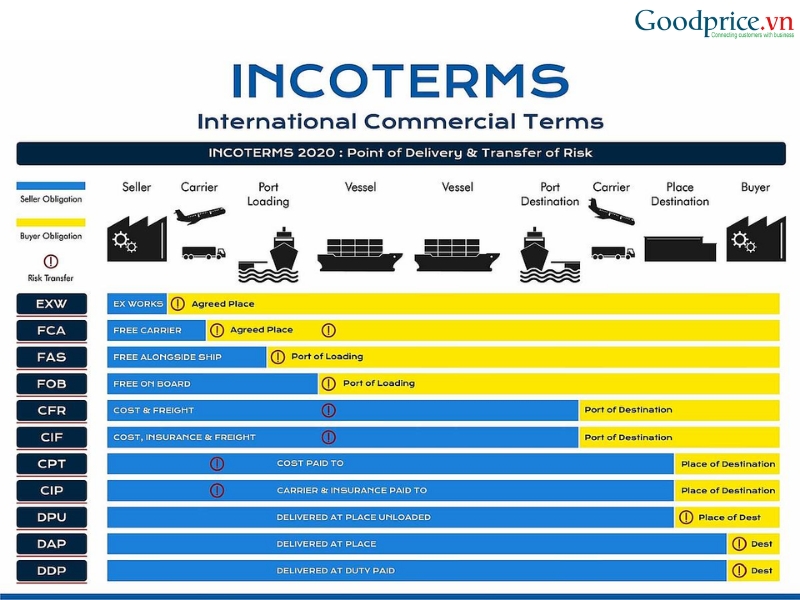
In fact, under Incoterms 2020, import-export companies in Vietnam have formed a clear pattern:
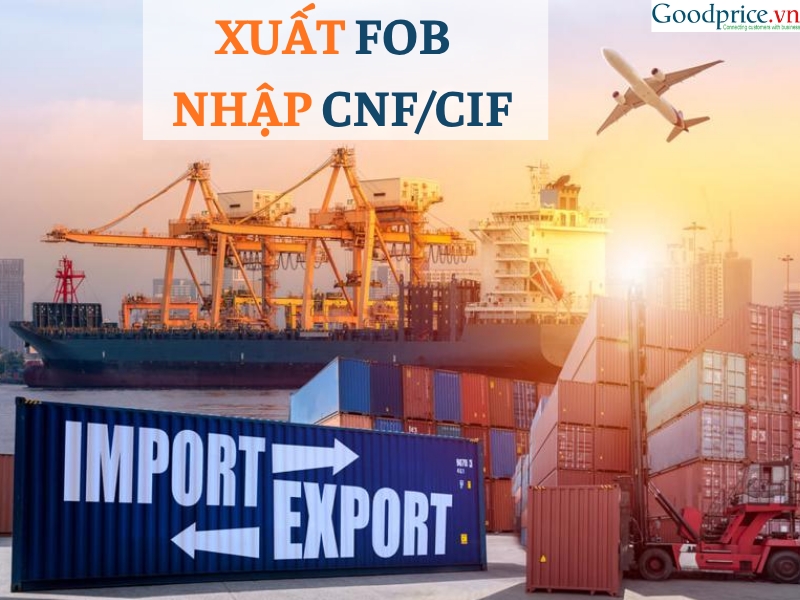
- For exports, businesses mainly prefer FOB (Free On Board).
- For imports, the most common choices remain CIF (Cost, Insurance & Freight) or CNF (Cost & Freight).
This preference is not random but stems from Vietnam’s logistics capacity, negotiation ability, and trading habits in international commerce.
What is FOB?
According to Incoterms 2020, FOB (Free On Board) is a delivery term used for sea transport and is widely applied in international trade. Under this term, the exporter’s responsibility ends once the goods are loaded onto the vessel at the port of shipment. From that moment, international freight costs and risks belong to the importer.
- Risk transfer point: At the ship’s rail, port of loading.
- On commercial documents: FOB price is always accompanied by the name of the loading port.
In maritime transport, risks such as bad weather, accidents, or piracy are unpredictable. Therefore, when buying under FOB terms, buyers usually purchase cargo insurance to minimize potential losses.
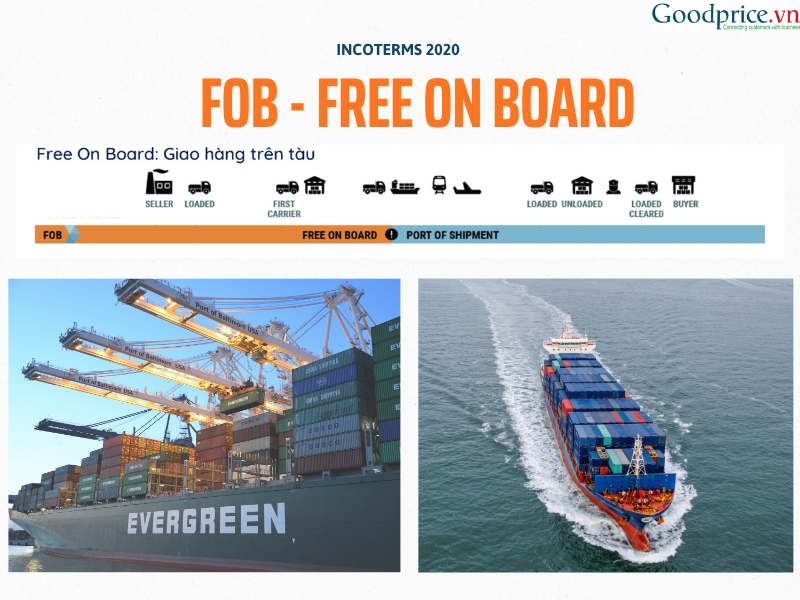
Why do Vietnamese exporters prefer FOB?
When exporting to international markets, particularly in industries such as agriculture, seafood, wood products, and textiles, most Vietnamese exporters prioritize FOB terms. The main reasons are:
- Leveraging competitive advantages: Vietnamese companies are competitive in production costs and product quality, but not yet strong in managing international logistics. FOB allows them to focus on production rather than complex global transport chains.
- Limiting responsibility: Once the goods have been loaded onto the vessel at a Vietnamese port, the exporter’s responsibility is considered complete. From that point, all transport costs and risks fall on the buyer.
- Focusing on product quality: By not bearing international transport risks, exporters can allocate more resources to improving product quality and added value.
For these reasons, FOB has become the most commonly used delivery term in Vietnam’s export activities.
What are CNF and CIF?
Both CIF (Cost, Insurance and Freight) and CNF (Cost and Freight) are Incoterms 2020 delivery terms commonly used in maritime transport.
- Under CNF, the seller is responsible for paying the freight to deliver goods to the named port of destination, but risk transfers to the buyer once the goods are loaded onto the vessel at the port of shipment. This means that if an incident occurs during transport, the buyer must bear all risks.
- Under CIF, in addition to covering freight costs like CNF, the seller must also purchase insurance for the goods during the sea voyage. However, the risk still transfers to the buyer as soon as the goods are loaded onto the vessel. The seller’s insurance is usually only at the minimum level, so in many cases, the buyer still needs to purchase additional insurance for better protection.
- Risk transfer point for CIF/CNF: Once the goods are loaded onto the vessel at the port of shipment.
- On commercial invoices: CIF/CNF prices are always listed along with the name of the port of discharge, to define the seller’s transport obligations and costs.
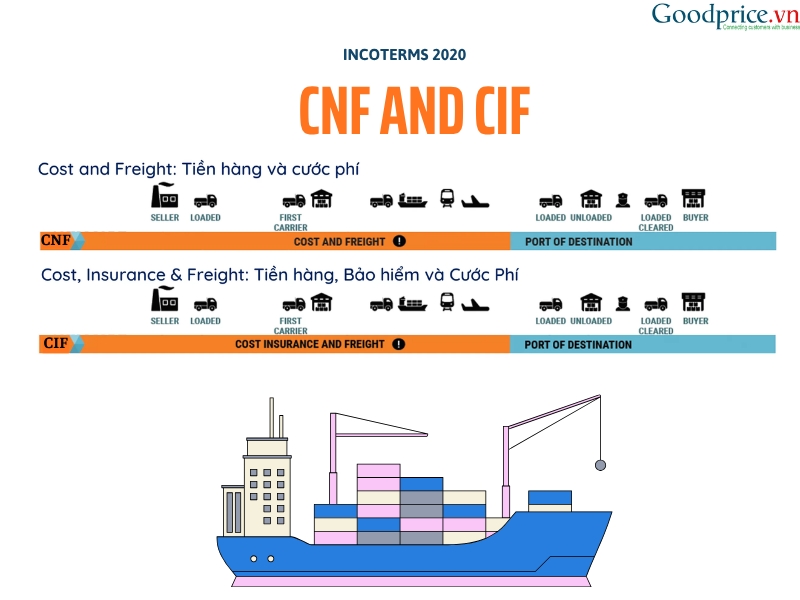
Why are CNF and CIF popular in Vietnam’s import activities?
Unlike exports, in import activities of raw materials, machinery, and equipment from China, Korea, Japan, or European countries, Vietnamese companies tend to choose CIF or CNF. The reasons include:
- Convenience and simplicity: The foreign supplier arranges the entire international transport, and under CIF even provides cargo insurance. This helps Vietnamese companies reduce the logistics burden.
- Time efficiency: Companies do not need to directly work with shipping lines or international freight forwarders, thereby shortening procedures and focusing on import and distribution.
- Reducing transport risks: Under CIF, the seller has already purchased insurance for the goods. This gives Vietnamese importers greater peace of mind if incidents occur at sea.
Because of these advantages, CIF and CNF have become the most widely applied terms in Vietnam’s import operations.
Watch now: A quick TikTok video explaining Incoterms 2020 – FOB, CIF, or CNF
Conclusion
In international trade, Vietnamese companies use FOB most frequently for exports, while CIF and CNF are the most common Incoterms for imports. This trend helps enterprises maximize their competitive advantages and align with Incoterms 2020.
GOODPRICE VIETNAM TRADING AND SERVICE COMPANY LIMITED
Email: [email protected]
Facebook: Goodprice Viet Nam
Phone: +84 906368199 or +84 916112833
Hotline: 1900636299
The article is of interest.

Tác dụng tuyệt vời của bột chùm ngây có thể bạn chưa biết

Super Fast Weight Loss Menu With Cereal Flour In Just 1 Week
Uses of cardamom in food and health

Is Using Purple Yam to Create Natural Purple Color in Food a Growing Trend?
Rice export market to Africa continues to increase strongl