

Versatile And Wonderful Uses Of Taro Powder
White taro powder is a type of food powder made from fresh white taro root – a familiar and humble tuber in Vietnamese cuisine. After being thoroughly washed, peeled, steamed, dried, and finely ground, the taro becomes a soft powder with an ivory white to light purple hue and a naturally pleasant aroma. White taro powder not only retains the flavor and nutrients of fresh taro but is also highly convenient to use.
Thanks to its gentle properties and ease of use, white taro powder is widely applied in four main areas: culinary uses, beauty care and health support.
CHARACTERISTICS OF WHITE TARO POWDER
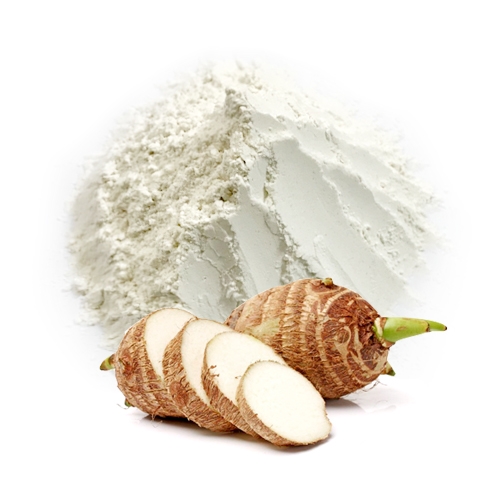
Color: Naturally ivory white
Texture: Fine, light, and easily dissolves in warm water
Aroma: Mild and pleasant scent of cooked taro
Flavor: Lightly nutty, mildly sweet, not bitter
Versatility: Suitable for making drinks, cooking, baking, porridges, and desserts
THE VERSATILE USES OF WHITE TARO POWDER
1. Culinary Uses – A Natural and Convenient Ingredient
White taro powder offers a gentle nutty flavor and natural fragrance, making it a favorite in many recipes:
+ Beverage Preparation
Ideal for making taro milk tea, taro lattes, taro smoothies, or warm taro milk drinks.
Simply dissolve the powder in warm water, add milk or sugar, and you have a delicious, nutritious drink.
A healthier alternative to synthetic taro syrups or artificial flavorings.
+ Baking
Used in mooncakes, mochi, cream puffs, muffins, flans, taro cakes, etc.
Adds a natural aroma, light color, and enhances taste without the need for food coloring.
+ Sweet Soups & Desserts
Used in taro tapioca sweet soup, mung bean taro sweet soup, or mixed sweet soups.
Convenient compared to fresh taro as it reduces prep time and enhances flavor.
+ Porridges, Soups, and Baby Food
Easily mixed into porridge or soup for children or elderly people with poor appetite.
Gentle flavor, easy to digest, and helps boost energy and fiber intake.
+ Mixing with Cereals or Instant Powders
Can be sprinkled on oatmeal, cereal, or nutritional grain powder to enhance taste and add more fiber and healthy starch.
>> Related: Easy and delicious glutinous rice flour cake recipes.
2. Beauty Applications – Gentle and Easy to Use
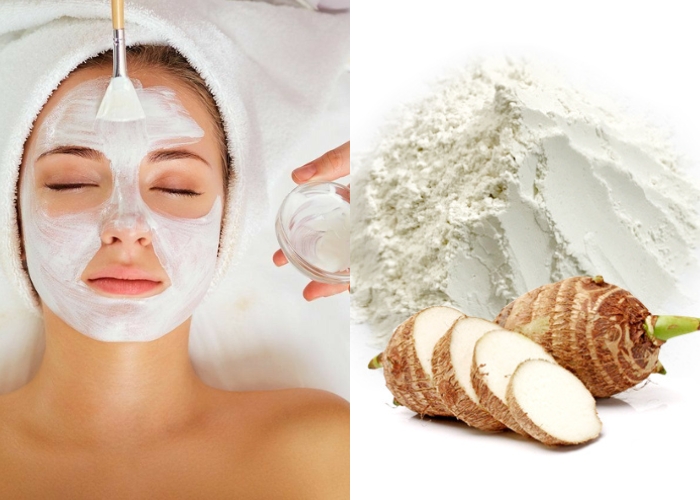
Besides culinary use, white taro powder is also favored in skincare routines:
+ Nourishing Face Mask
Mix taro powder with yogurt, fresh milk, or honey to make a natural face mask.
Helps moisturize, soothe the skin, and improve radiance thanks to vitamin E and natural antioxidants.
+ Gentle Exfoliator
Combine the powder with water and gently massage onto the skin to remove dead cells and clean the surface – especially suitable for dry or sensitive skin.
+ Skin Brightening Support
Long-term use helps even out skin tone, reduce dullness and dryness, especially for sensitive or sun-exposed skin.
>> Discover the benefits of purple sweet potato powder for beauty.
3. Outstanding Health Benefits
White taro powder is a healthy source of starch – low in fat, rich in fiber and vitamins:
+ Provides Natural Energy
Contains slow-digesting carbs that supply steady energy without causing blood sugar spikes.
+ Supports Digestion
High in soluble fiber, it improves digestive function, relieves constipation, and soothes the stomach.
+ Great for Dieting
Low-calorie, filling, gluten-free – ideal for vegetarians, dieters, or those on a light diet.
+ Suitable for Kids and the Elderly
Easy to digest, smooth texture – can be mixed into thin porridge or nutritious drinks at home.
>> See also: Is ginger powder good? How to use ginger powder for effective weight loss at home.
HOW TO MAKE WHITE TARO POWDER AT HOME
1. Ingredients
Fresh white taro: Choose large, firm roots with clean skin and no signs of rot or cracking.
Clean water: For washing and preparing the taro.
Coarse salt (optional): Helps remove taro sap and clean more thoroughly.
2. Tools Needed
+ Colander
+ Blender or food grinder
+ Fine mesh sieve
+ Drying tray or bamboo mat
+ Food dehydrator (if available)
+ Glass jars or ziplock storage bags
3. Steps
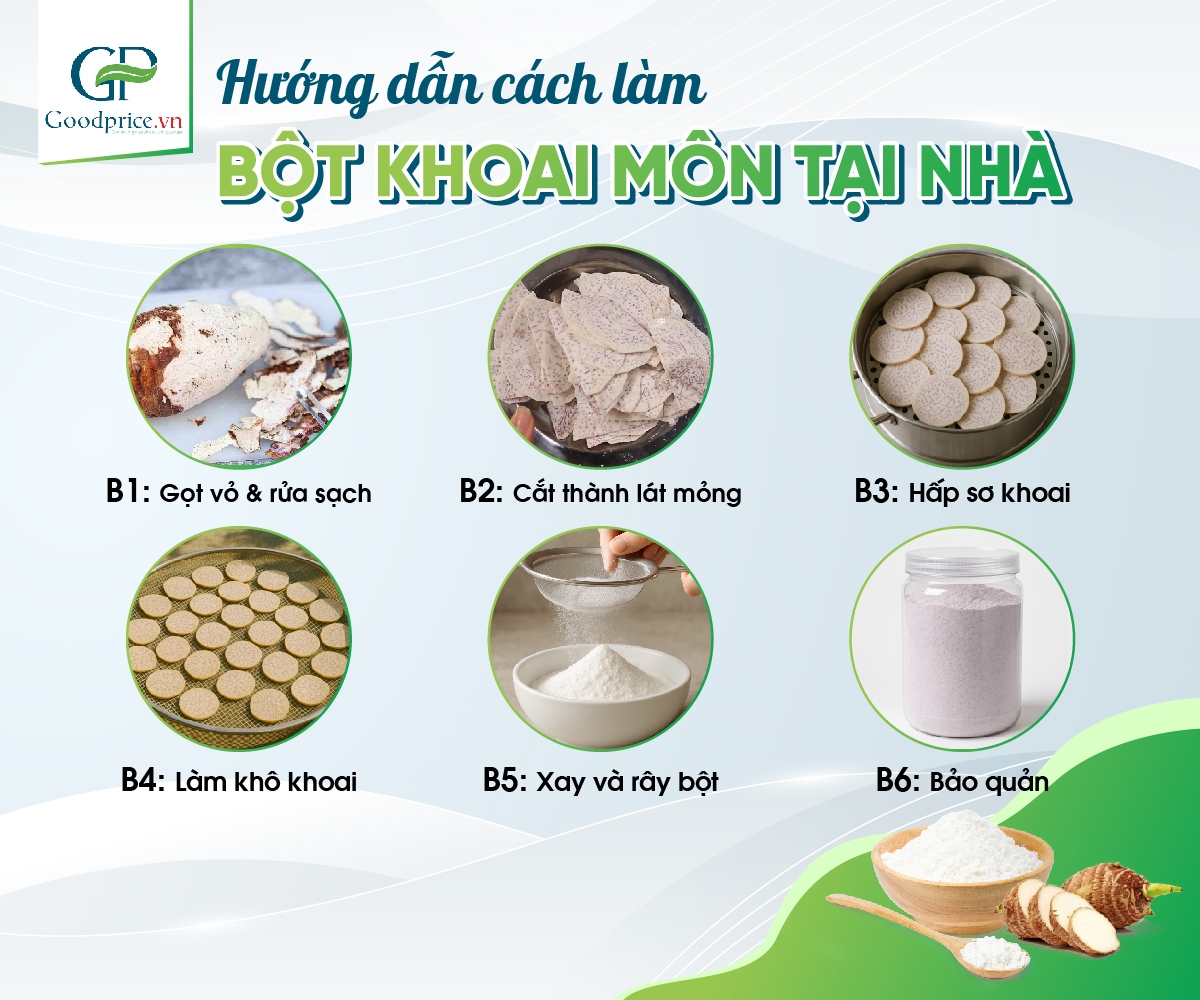
Step 1: Peel and Clean Taro
+ Peel off all dark skin and rinse under running water to remove dirt and sap.
+ If sap is excessive, soak slices in diluted salt water for 5–10 minutes, then rinse again.
Note: Wear gloves to avoid skin irritation from the sap.
Step 2: Slice the Taro
+ Cut into thin slices (0.3–0.5 cm thick).
+ The thinner the slices, the faster they dry and the better the powder quality.
Step 3: Light Steaming (Optional but Recommended)
+ Steam sliced taro for 5–7 minutes to reduce sharp odor, enhance aroma, and improve digestibility.
+ Let the taro cool completely before drying.
Step 4: Drying the Taro
A. Sun Drying:
+ Spread slices on clean trays or mats in direct sunlight for 2–3 days until crisp.
+ Bring inside at night to prevent moisture from dew.
B. Using a Dehydrator:
+ Arrange slices evenly on trays.
+ Dry at 60–70°C for 6–8 hours depending on slice thickness and machine power.
+ Taro must be completely dry before grinding.
Step 5: Grinding and Sieving
+ Blend dried taro in small batches to avoid overheating.
+ Sieve thoroughly to separate fine powder from coarse bits (grind coarse bits again).
+ Repeat the grind–sieve process until done.
Step 6: Storage
+ Store finished powder in sealed glass jars or vacuum zip bags.
+ Keep in a cool, dry place away from direct sunlight.
+ For large batches, refrigerate to extend shelf life and prevent mold.
* Note When Making Taro Powder at Home:
Powder must be completely dry to avoid spoilage.
No preservatives added – best used within 1–2 months.
Ensure hygiene throughout the process to prevent contamination.
WHY CHOOSE WHITE TARO POWDER FROM GOODPRICE
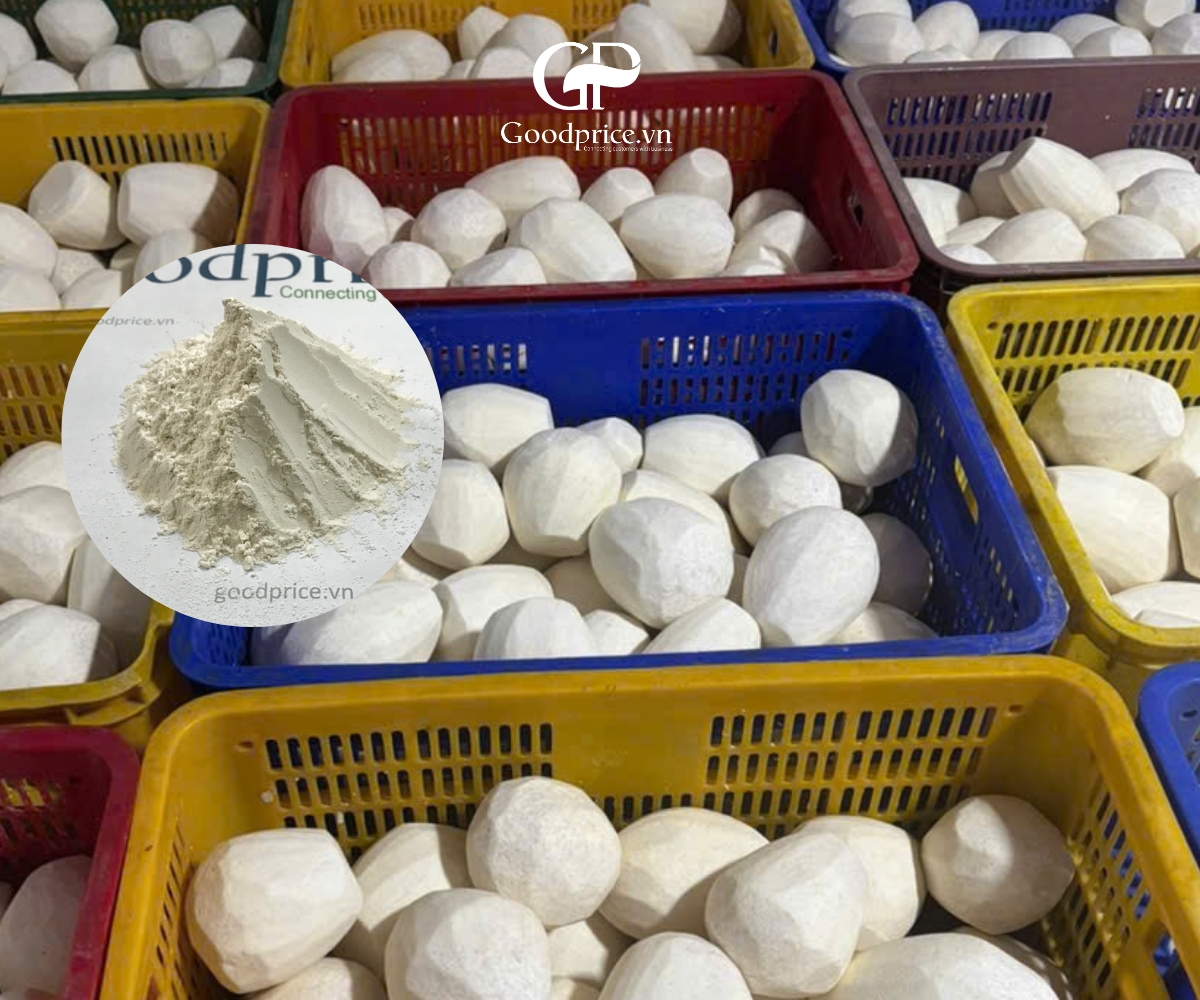
1. Saves time and effort
2. Modern, hygienic production process
3. High fineness – convenient to use
4. Premium taro quality – carefully selected
5. Long shelf life – no preservatives
6. Reasonable price – suitable for various needs
>> Goodprice supplies high-quality, export-standard White Taro Powder in both retail and wholesale quantities, trusted by many partners: https://www.goodprice.vn/vi/san-pham/bot-khoai-mon-336
Contact Information:
GOODPRICE VIETNAM CO., LTD
Hotline: 1900636299
Phone: 0906368199 – 0916112833
Email: [email protected]
The article is of interest.
How to Make Soft and Smooth Purple Yam Mooncake Filling
Mách bạn cách làm củ cải khô đơn giản chất lượng
Great benefits from green tea powder
6 uses of Oatmeal to help lose weight and keep fit
Garlic powder and its uses for health