

How to Make Vietnamese Spring Rolls Using a Non-Stick Pan
Making bánh cuốn with a non-stick pan is becoming a popular choice for small food businesses because it eliminates the need for bulky traditional steaming equipment. This article shares a simple, easy-to-standardize method and suggests suitable rice flour for bánh cuốn tailored to B2B business models.
What Makes the Non-Stick Pan Method Special?
This method helps reduce equipment investment, simplifies staff training, and adapts well to various business scales. When combined with the correct batter ratio, bánh cuốn can still be thin, soft, and consistently smooth.
That is why making bánh cuốn with a non-stick pan is increasingly favored in commercial kitchens: no steam pot required, fast operation, and better quality control. With just a non-stick pan and stable flour quality, businesses can produce visually appealing bánh cuốn with minimal defects.
This approach effectively solves cost and operational challenges for new food businesses. Below are the key advantages.
1. Lower Initial Investment
- No need to purchase specialized steaming equipment.
- Easy to utilize existing kitchen tools.
2. Easy Staff Training
- Simple process with fewer technical steps.
- New staff can learn quickly, reducing torn or uneven sheets.
3. Suitable for Multiple Business Models
- Breakfast bánh cuốn shops.
- Canteens, central kitchens, and fast delivery operations.
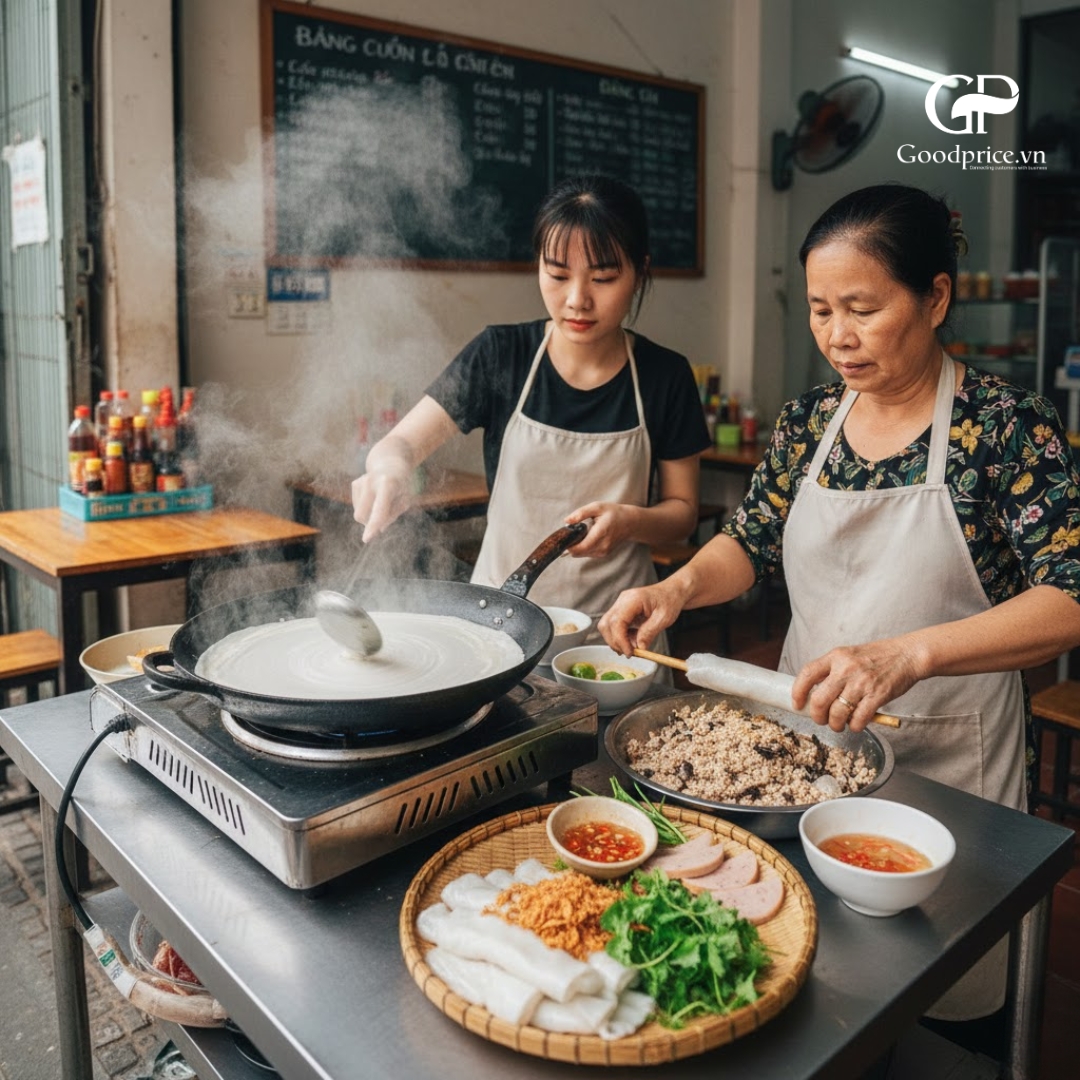
In short, this is a flexible solution for businesses aiming to optimize costs while maintaining consistent quality.
Ingredients for Making Bánh Cuốn with a Non-Stick Pan
To achieve good results with this method, ingredient consistency is essential from the start.
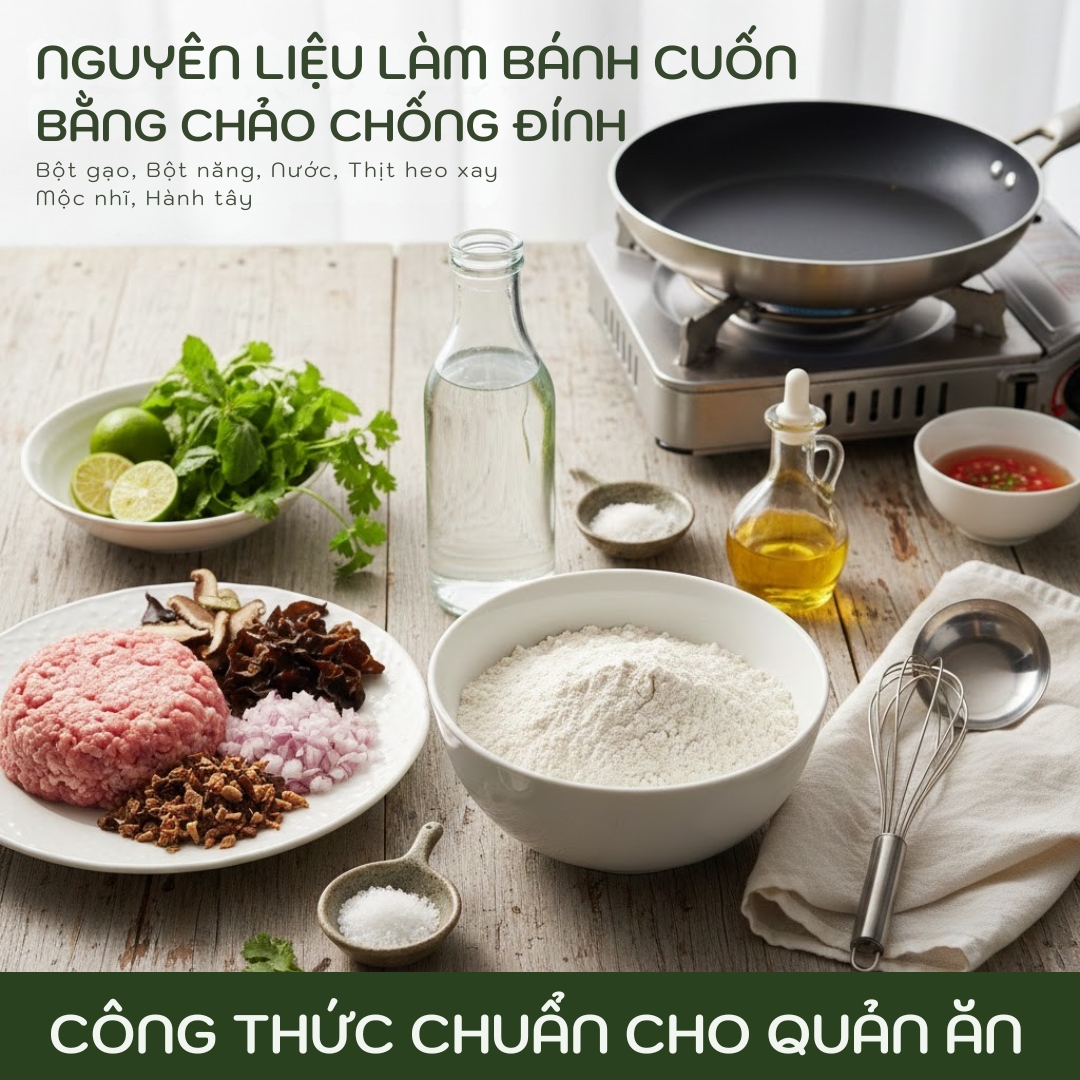
Basic ingredients include:
- High-quality rice flour for bánh cuốn with stable performance.
- Tapioca starch for light elasticity.
- Filtered water, salt, and cooking oil.
Choosing the right flour helps reduce recipe testing time and minimizes waste in large-scale production.
Standard Bánh Cuốn Batter Ratio for Food Businesses
This step determines the thinness and elasticity of the bánh cuốn. Below is an easy-to-follow checklist.
Batter Preparation Checklist
- Suggested ratio: rice flour : tapioca starch : water ≈ 1 : 0.1 : 2.2.
- Stir thoroughly until smooth; strain if necessary.
- Let the batter rest for 20 - 30 minutes before cooking.
A standardized batter ratio prevents brittle sheets, tearing, and misshapen rolls.
Cooking Process Using a Non-Stick Pan
In this method, even spreading and proper heat control are crucial.
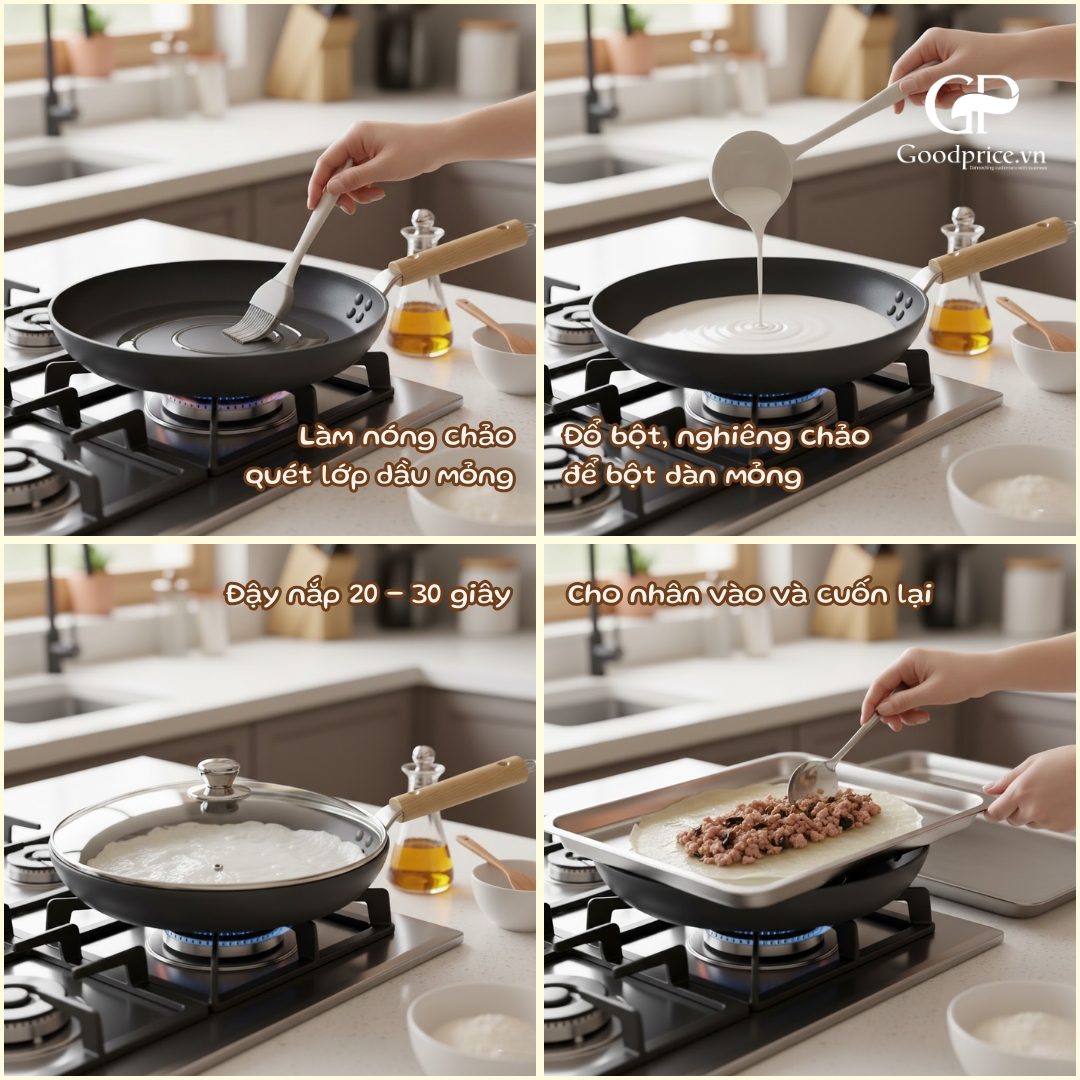
Step-by-Step Instructions
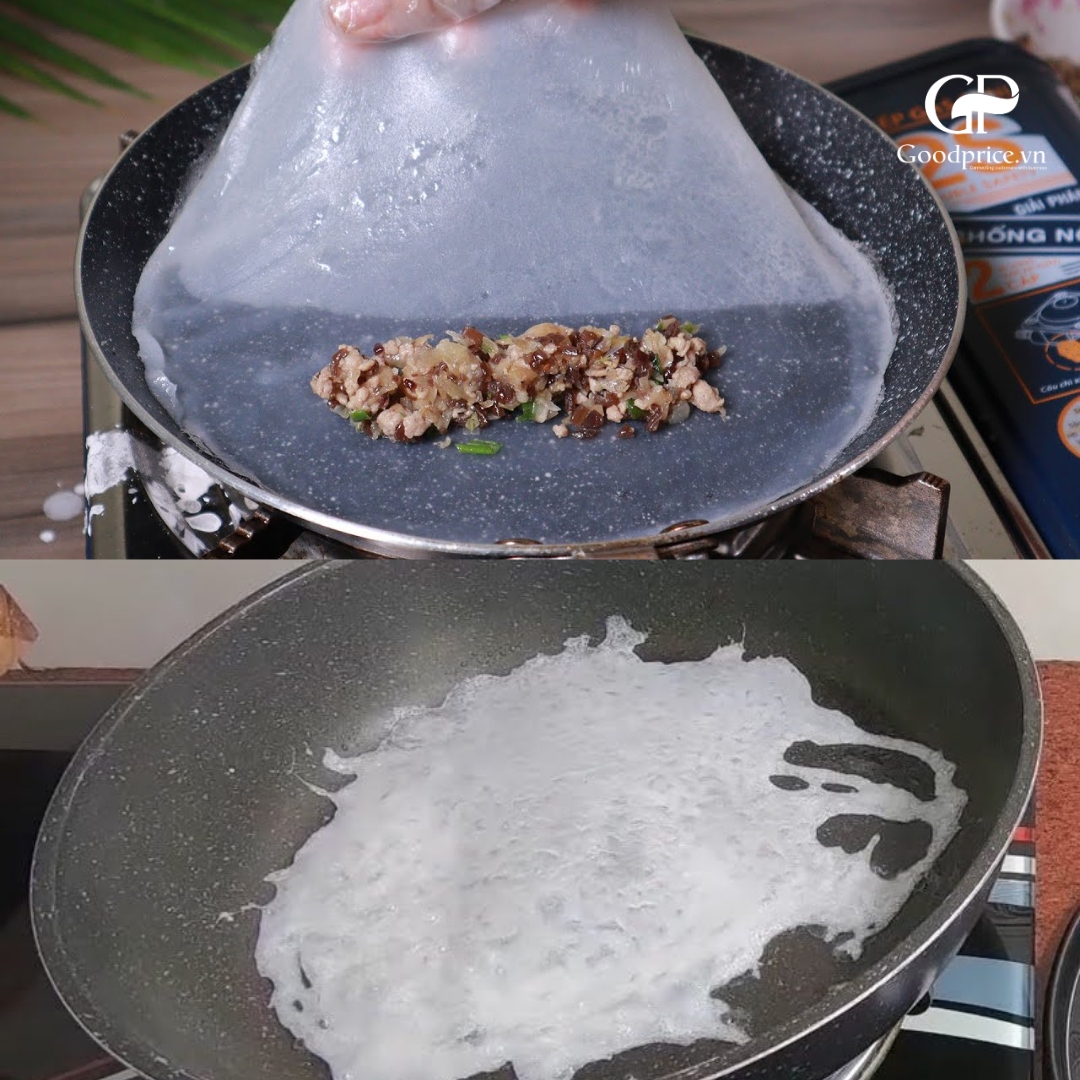
1. Heat the pan over medium heat and lightly brush with oil.
2. Pour in the batter and tilt the pan to spread it thinly.
3. Cover and cook for 20 - 30 seconds until the sheet is fully cooked.
This process ensures evenly cooked bánh cuốn with a smooth surface that is easy to remove.
Finishing and Serving for High-Volume Sales
- Add filling and roll while the sheet is still warm.
- Place finished rolls on lightly oiled trays to prevent sticking.
- Store in insulated containers during peak service hours.
These steps help businesses serve quickly while maintaining product appearance and quality.
Why is Goodprice rice flour suitable for food businesses?
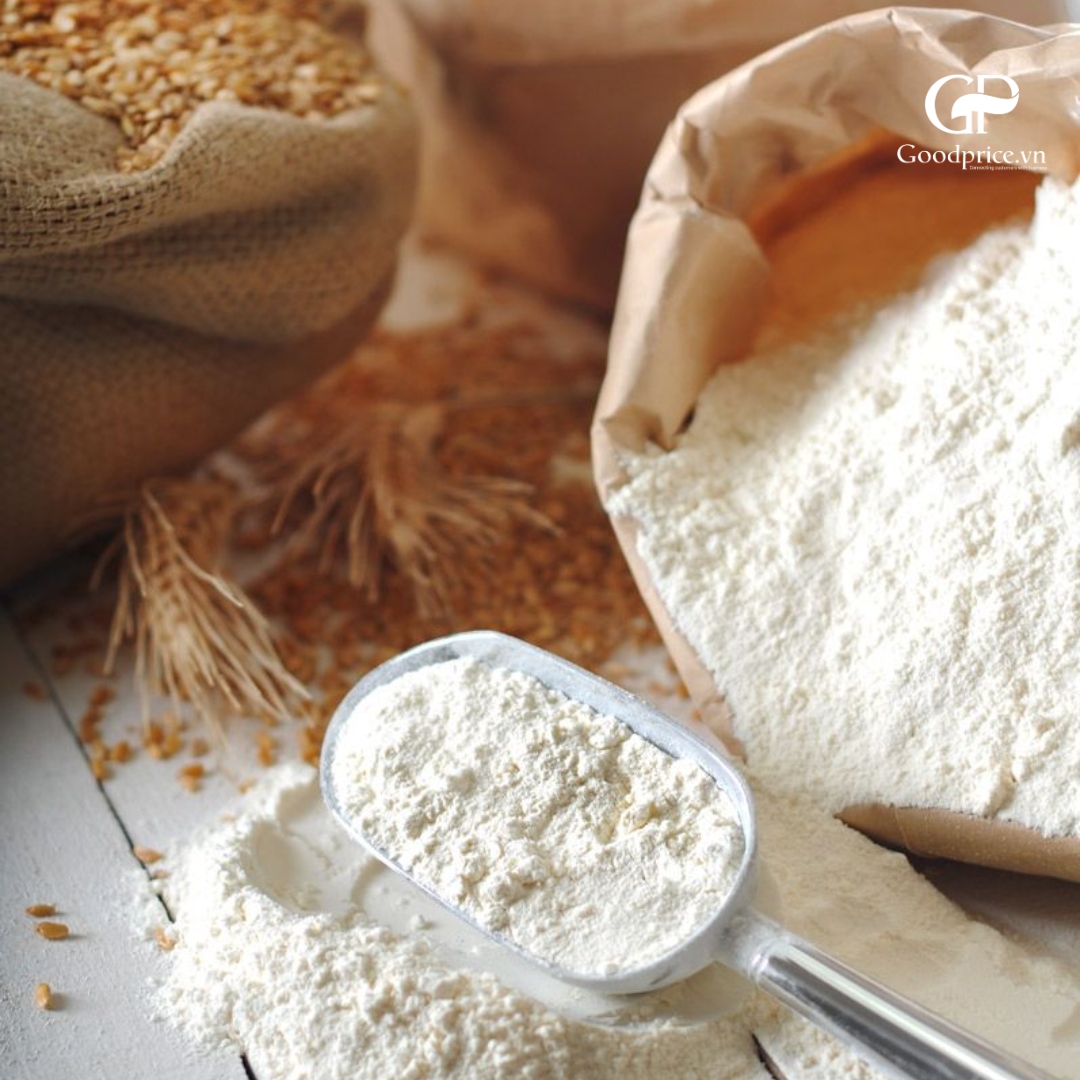
When applying the non-stick pan method for making Vietnamese rice rolls, flour quality plays a key role in ensuring long-term operational stability.
Key advantages include:
- Competitive pricing for B2B customers, making profit optimization easier.
- Fine, white flour that mixes easily with minimal clumping.
- Well suited as rice flour for shops that need consistent rice roll quality every day.
A single type of flour that can be used for many dishes:
- Steamed rice rolls, thin steamed rice sheets, hot rice flour cake;
- Vietnamese sizzling pancakes, mini pancakes, and steamed rice sponge cake.
- It can also be used as coating flour for frying, or diluted batter for steaming and sheet-making dishes.
- This versatility makes it ideal for central kitchens, canteens, and eateries that serve multiple rice-flour-based dishes.
Goodprice is committed to providing sustainable ingredient solutions for food businesses and commercial kitchens.
In short, making steamed rice rolls with a non-stick pan is a simple, cost-saving, and easily scalable solution for various F&B models. When combined with Goodprice’s stable rice flour for food service, restaurants can maintain consistent quality and long-term profitability. Learn more about ingredients and B2B policies at Goodprice.
CÔNG TY TNHH TM DV GOODPRICE VIỆT NAM
Email: [email protected]
Facebook: Here
Tik Tok: Here
Phone: 0906368199 - 0916112833
Hotline: 1900636299
The article is of interest.
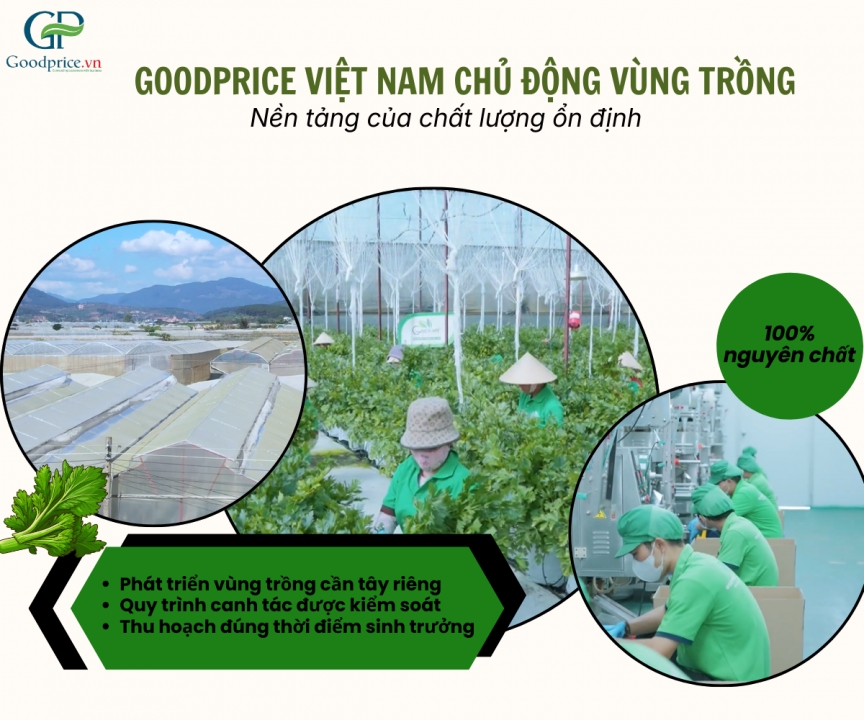
Cold-Dried Celery Powder Production Process at Goodprice Vietnam
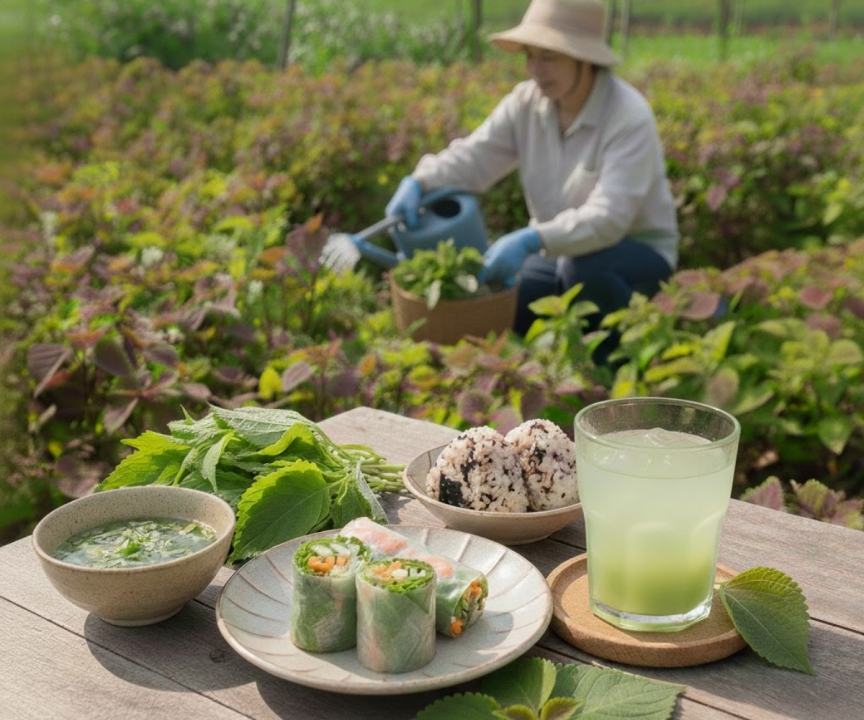
Seasonal Transitions and the Growing Demand for Perilla Leaf Powder to Support Cold Relief
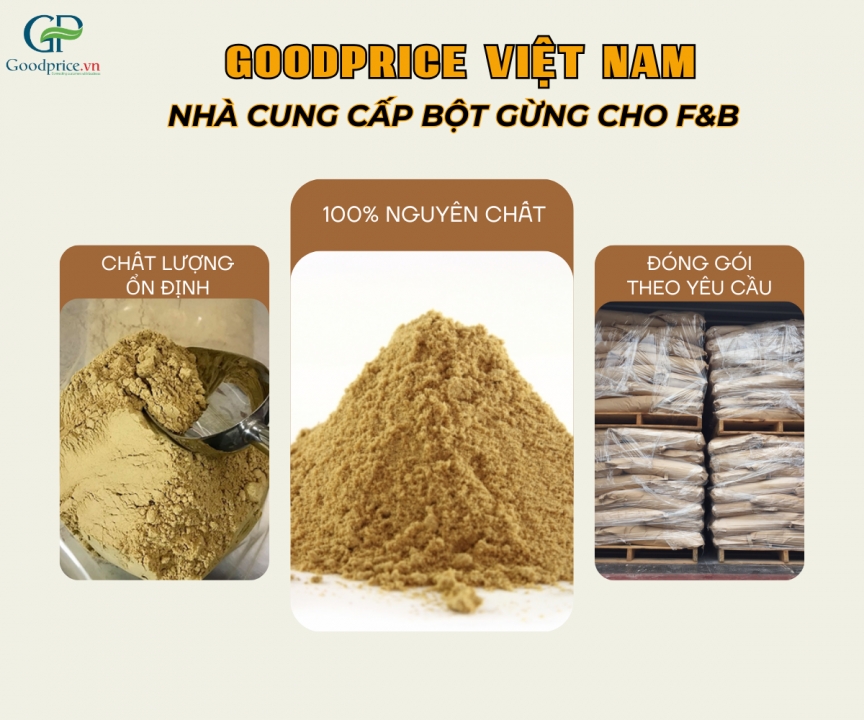
Advantages of Using Ginger Powder in the Modern F&B Industry
Panax vietnamensis - A rare herb with many uses
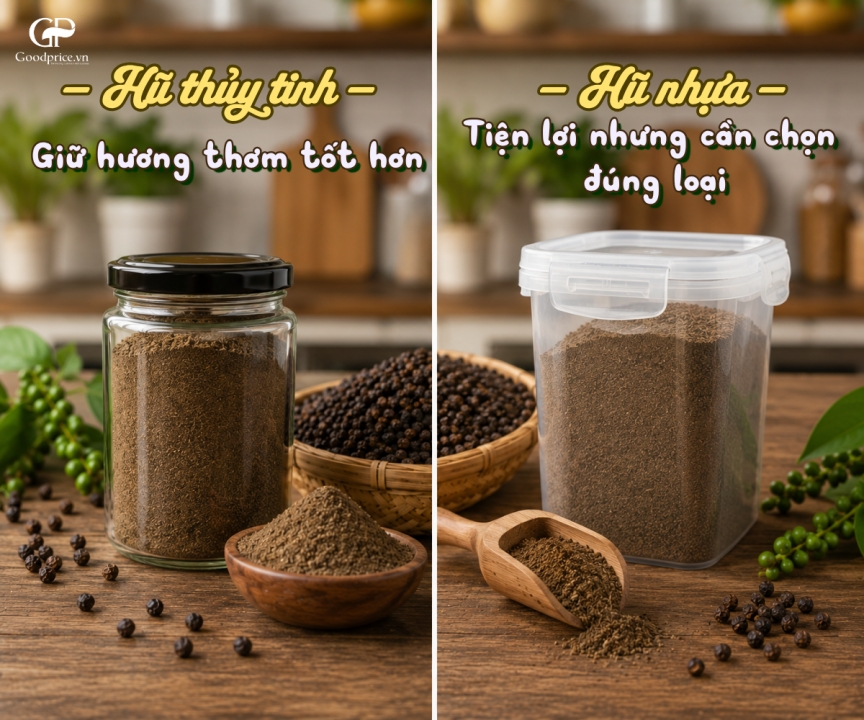
Should You Store Ground Black Pepper in a Glass Jar or a Plastic Container?